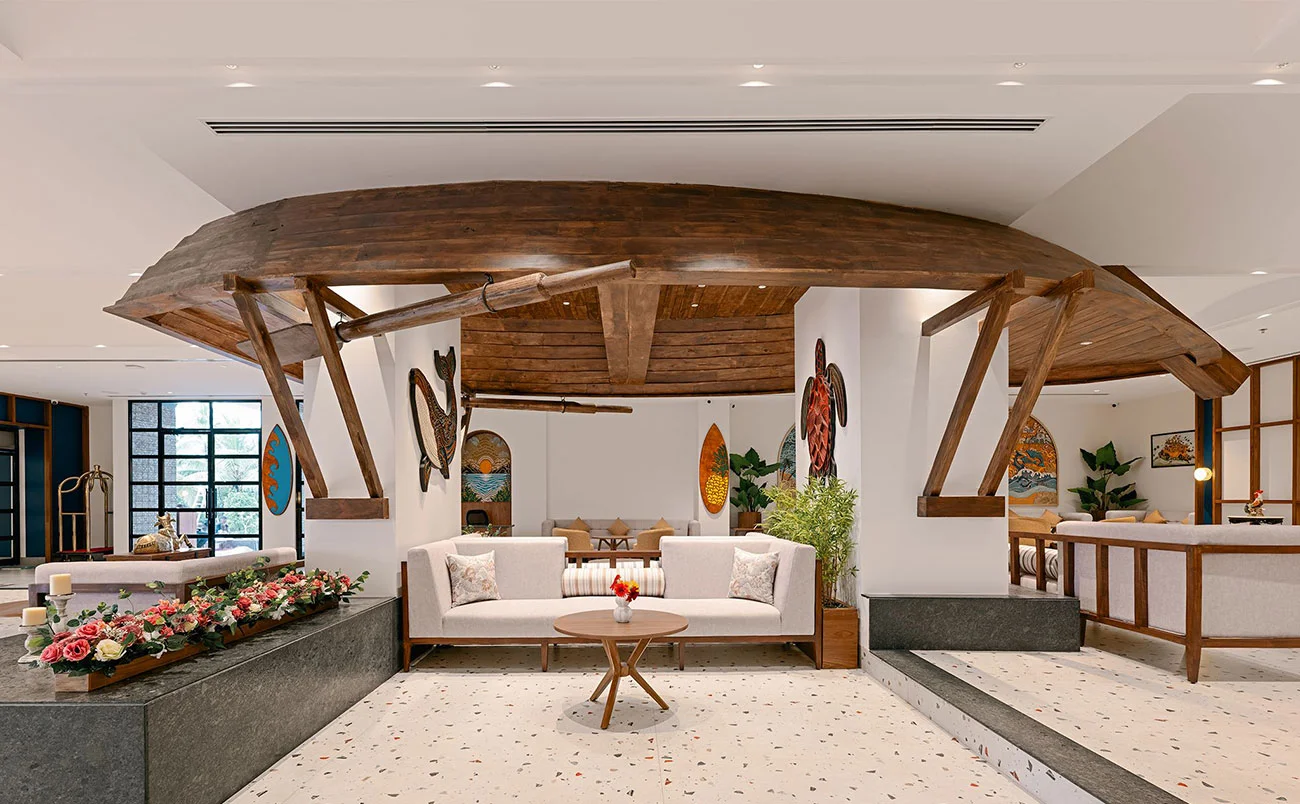
What you see is a beautiful space.
What we saw was a 30-foot challenge hanging in the air.
What looks like a design feature…
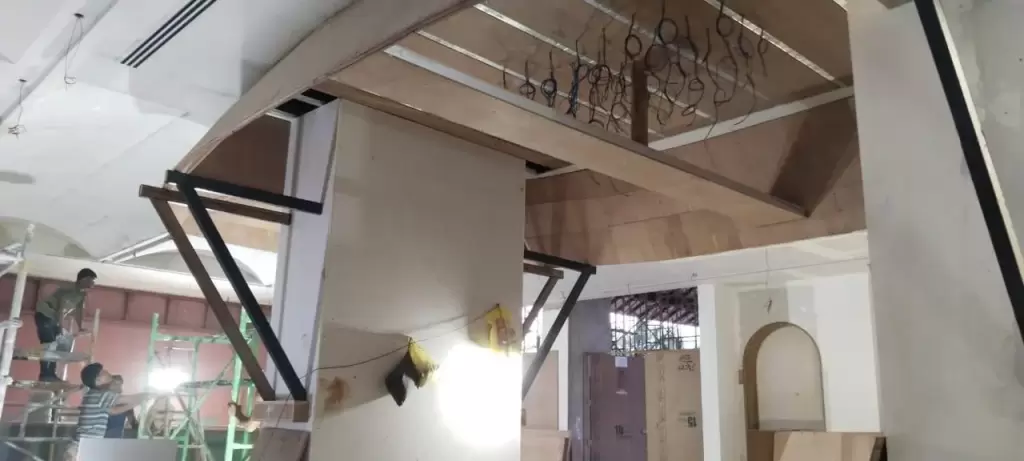
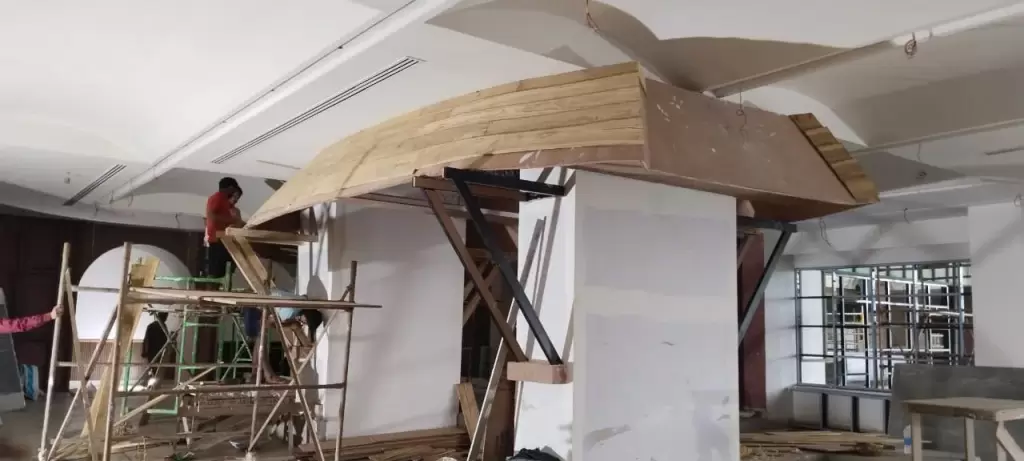
was once raw plywood, steel frames, dust, and tough decisions on site.
When people walk into this space today, they notice the boat-shaped feature and say, “Wow, that looks amazing.” I smile, because I remember what it looked like in the beginning — raw plywood, exposed steel, wires hanging, dust, noise, scaffolding, and confusion.
That 30-foot boat wasn’t just a design element. It was a responsibility. The render looked elegant and simple, but on site the questions were different: How do we suspend something this size safely? How do we manage the weight? How do we align curves with an existing structure that was never built for this? How do we coordinate with HVAC, lighting, and services running above the ceiling?
This is the part no one sees. There were days when the structure looked incomplete and uncertain, even risky to someone who didn’t understand the process. But that’s what execution really is. It’s not glamour. It’s patience, calculations, corrections, and supervision.
Steel frames were hidden inside what now looks like wood. Curves were achieved layer by layer. Work was sequenced so one mistake wouldn’t affect ten other trades. Every day on site, decisions were taken quietly — not to make it look impressive, but to make it safe, balanced, and lasting.
Then one day, finishes started going on. The chaos slowly turned into form, and the form turned into presence. Today, guests see a warm, welcoming feature — a design statement. We see teamwork, engineering, discipline, and the satisfaction of turning a sketch into something real.
Projects like this are why I still enjoy being on site after all these years. Design may win attention, but execution earns trust. And for us, that trust is always the real foundation behind every space we build.